Sunday, May 22, 2022


Guest Post: Gilded Age Genre Blending: 3 keys to hist/myst/fantasy concoctions by Jayne Barnard

Please welcome author Jayne Barnard to the blog today.
Gilded Age Genre Blending:
3 keys to hist/myst/fantasy concoctions
by Jayne Barnard
After decades of ceding the historical costume drama to British
television, it’s high time for American production to back some territory. HBO’s
lavish new series, The Gilded Age, is a late-1800s drama rooted among the
fabulously wealthy NYC families that used to crowd their debutante daughters into
Mrs. Astor’s 400-person ballroom. The debs dancing at glittering balls were the
Kardashians of their day: followed, photographed, and interviewed. Their lavish
weddings and cutting-edge wardrobes were guaranteed to sell magazines, their
lives the envy of millions. You don’t need to know all the political and social
and geographical forces to enjoy the show; you need only see characters whose actions
and motives are understandable to you despite that foreign-to-you context.
As well as villains and victims, mysteries need to show the
reader sleuths, suspects, red herrings, and character development that builds credible
motivation. On top of the basic year or era, historical fiction should include
politics, social structures, setting, and appropriate technology. SFF demands questing
characters, adventurous plotting, and often a world that differs startlingly
from our own. Each element adds to the word count.
Here are three keys
to cutting word waste and blending genre elements smoothly:
- Don’t
describe anything about the story-world except the bare essentials that readers
will need to ground them in the unfolding action. Yes, we love our
imaginary settings, but for blended genre stories we must concentrate on
what’s different from the reader’s default contemporary mental image. Into
the POV character’s thoughts, actions, and dialogue work in a few vital technological
and geographic elements. Then trust readers to fill in that backdrop’s
gaps for themselves. In my Maddie Hatter Adventures, my fashion reporter
sleuth has a clockwork bird that can capture images and record conversations.
Once the reader realizes the bird is a semi-sentient flying clockwork smartphone,
they no longer need detailed explanations for other new technologies. They
simply accept each one exists in that world.
- When
introducing characters, focus on what makes the alien, orc, or historical personage
different from the reader’s neighbour or coworker. Costume is key but so
is the way they were raised, if different from contemporary American. Maddie
Hatter grew up in a British ‘Steamlord’ family similar to the newly rich
Vanderbilts of Gilded Age NYC, but her mother comes from an Old Nobility family
in Britain and raised her as a young lady in that constrained mode. All
this family complexity, more than her clothing or hair color, gives Maddie
(and thus the reader) insight into the social hierarchies at play in GILDED
GAUGE, a fantastical adventure set in an alternate 1899 NYC. Again, integrate.
Don’t info-dump. You need to know it all to know which are the important
bits; the reader doesn’t.
- Make one
element of your mystery something that could only occur in that historical
era or alternate reality. Two examples:
- In
Nancy Springer’s delightful alternate-history detective tale, ENOLA HOLMES,
the motive driving the young marquis could only work at that precise moment
in English history: when a parliamentary battle was brewing over the
future of the country. The marquis’s vote would decide whether the landed
nobility continued to hold near-absolute power over the landless, and
therefore voteless, workers, or whether workers would gain the right to
be represented in Parliament. The novel and the later movie masterfully
blend light fantasy & crime with a piece of real, impactful English
history: the Third Reform Act (also known as the Representation of the
People Act) was a real bill that passed in 1884, with the related Redistribution
of Seats Act being passed in 1885.
- SFF crime
stories that could happen down the block but are set on a space station
will not be as widely engaging as those that require, nay, demand the fictional
setting you’ve created for them. Star Trek Deep Space Nine took flack for
being a soap opera set in space, but one S7 episode created a tense,
psychologically suspenseful murder mystery in which the killing was both
fully understandable to contemporary viewers/readers and committed with technology
that only exists in that alternate future world.
This then is the essence of genre blending: integrate your world-building
with the lead characters’ thoughts and actions; make the crime’s motivation
specific to those characters with their era/alt-world upbringing; commit your crime—or
solve it—with technology or other elements unique to that time/place/culture.

The Gilded Age gets
the mystery treatment in the “Gilded Newport” novels by Alyssa Maxwell: these same
NYC families, but at their multi-story marble mansions in Newport Beach, as
seen through the cynical eye of a poor relation who writes for a newspaper. In the
second of my Maddie Hatter Adventures, Gilded Age NYC and some historical personages
overlap with Alyssa’s, and my heroine also writes for a newspaper. Maddie faces
far more than fearful Society matrons and fashion faux pas, though: she must
tackle impostors, kidnappers, and industrial spies seeking to steal a new millionaire’s
unique clockwork gauge.
That blend of crime, historical, and fantasy elements in ‘Gilded
Gauge’ won the Alberta Book of the Year (which usually goes to local history
novels or literary fiction) and a Prix Aurora nomination for Canadian science
fiction & fantasy, as well as hitting local bestseller lists four times and
starting a new worldwide Steampunk sport: parasol dueling.
Whatever genres you’re blending, start with the foundation
garments—those essential elements of each---and then add texture afterward,
like beadwork and ribbons on a Gilded Age gown.
Jayne Barnard ©2022
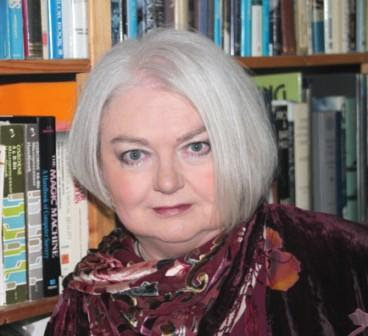
Jayne Barnard’s novels won her the Canadian Crime Writing Award of Excellence and the Alberta Book of the Year. She’s been shortlisted for both the Prix Aurora and the UK Debut Dagger. With dozens of short stories sold, she’s won the Calgary Crime Association Award, the Bony Pete/Bloody Words award, and was 3x bridesmaid for the Great Canadian Story prize. She lives in a vine-covered cottage between two rivers, keeping cats and secrets.
Find her on:
Twitter https://twitter.com/JayneBarnard1
Instagram https://www.instagram.com/je_barnard/
Facebook https://www.facebook.com/MaddieHatterAdventures
Peek into her Maddie Hatter Adventures at http://ow.ly/niW150F74tX
Saturday, May 21, 2022
KRL: KRL This Week update for 5/21/2022
Up on KRL this morning a review and giveaway of "Strawberried Alive" by Jenn McKinlay (the winner also gets a cupcake bakery jar opener) https://kingsriverlife.com/05/21/strawberried-alive-by-jenn-mckinlay/
And a review and giveaway of "Murder in the Community Garden" by Judith Gonda, along with an interesting interview with Judith https://kingsriverlife.com/05/21/murder-in-the-community-garden-by-judith-gonda/
We also have a review and giveaway of "Double Shot Death" by Emmeline Duncan along with a cold brew coffee recipe from Emmeline, a perfect drink for your summer reading https://kingsriverlife.com/05/21/double-shot-death-by-emmeline-duncan/
And the latest Queer Mystery Coming Attractions from Matt Lubbers-Moore https://kingsriverlife.com/05/21/queer-mystery-coming-attractions-june-2022/
For those who prefer to listen to Mysteryrat's Maze Podcast directly on KRL you can find the player here for our latest episode which features the mystery short story "Death on the Rocks" written by Guy Belleranti and read by local actor Larry Mattox https://kingsriverlife.com/05/21/new-mysteryrats-maze-podcast-featuring-death-on-the-rocks-by-guy-belleranti/
Up during the week, another special midweek guest post, this one by mystery author Amy McNulty about her new book "Vampires and Video Games'' you can also enter to win a copy of the first book in the series https://kingsriverlife.com/05/18/vampires-and-video-games/
And another special midweek guest post, this one by mystery author Rebecca Jones about the differences between herself and her main character and about her new, and first, book "Steadying the Ark" https://kingsriverlife.com/05/18/one-of-these-things-is-not-like-the-other/
Up on KRL News and Reviews this week we have a review and ebook giveaway of "Adventures, Abduction, and Arrest"by Tonya Kappes
https://www.krlnews.com/2022/05/adventure-abduction-arrest-by-tonya.html
And a review and giveaway of "First Bite" by Avery Daniels https://www.krlnews.com/2022/05/first-bite-accidental-vampire-pi-by.html
Happy reading,
Lorie
Bookblog of the Bristol Library: Graveyard Fields by Steven Tingle
SleuthSayers: Reading About Writing by John Floyd
Scott's Take: The Death Of Doctor Strange by Jed Mackay
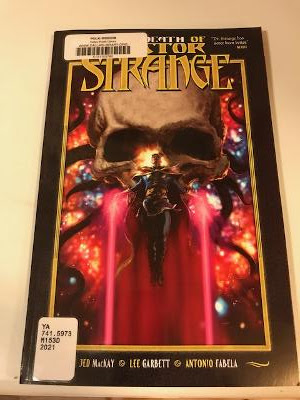
This tale is a love letter to the
character of Dr. Strange while showcasing how important he is to the Marvel Universe.
This tale includes Clea (Dr. Strange’s wife), Wong, Bats (the ghost dog),
various Avengers, and various enemies of Dr. Strange dealing with the aftermath
of his death. His death had many far-reaching repercussions.
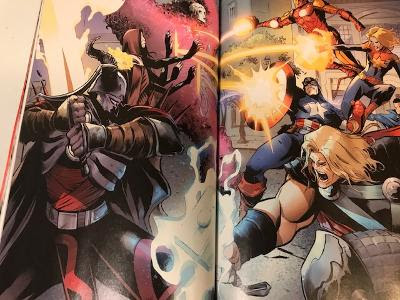
My main complaint is that there is
not enough time dealing with the grief of Dr. Strange’s death because the focus
is so much on moving the plot forward. For example, there is very little time
spent on how his death affects the students at his academy. The art is very
good and there is plenty of action and mystery for fans of Dr. Strange. I
highly recommend The Death Of Doctor Strange by Jed Mackay for
both new and experienced fans of Dr. Strange.
This series
is followed by Strange which deals with the new Sorcerer Supreme.
That series has only a couple of issues out and not enough to be released yet
in trade paperback. As such, there is no release date for the trade book.
My reading
copy came from the Polk-Wisdom Branch of the Dallas Public Library System.
Scott A. Tipple ©2022
Friday, May 20, 2022
Beneath the Stains of Time: The Mummy Case Mystery (1933) by Dermot Morrah
FFB Review: SINS FOR FATHER KNOX (1973) by Josef Skvorecky Reviewed by Barry Ergang

Another review by Barry Ergang found in the massively
magnificent archive here at Casa Tipple and Home Eatery Library….
SINS FOR FATHER KNOX (1973) by Josef Skvorecky
Reviewed by Barry Ergang
Father Ronald A. Knox, aside from being a clergyman, was one of the early
exponents of what has become the “Golden Age” mystery story: the formal, fairly-clued
whodunit and—in some cases— howdunit.
Among hardcore history-of-mystery buffs, Knox is probably best remembered for
his Ten Commandments for writing a detective story. In 1973, Czechoslovakian
author Josef Skvorecky wrote the novel Sins
for Father Knox, a chapter of which (“chapter” here loosely defined because each is actually an individual short
story with an occasional reference to one of its predecessors) violates one of Knox’s commandments. Chapter
descriptions—no spoilers!—follow.
Lieutenant Boruvka has his doubts about the guilt of Eve
Adam, who has been convicted of and imprisoned for the murder of film director
Rudolf Weyr. Despite being married and a parent, Boruvka can’t help finding Eve
attractive as he interviews her at the Czechoslovakian women’s prison,
listening to her story and remembering vital testimonies from her trial. Apart
from finally being able to solve the case and exonerate Eve, he finds that
investigation, like film-making, can be “An Intimate Business.”
Performing as a lounge singer at the Moulin Rouge in Sweden
and sharing an apartment with a stripper named Zuzka, Eve while breakfasting
one morning is approached by a large American who calls himself MacMac. He
presumes to know who she is because each has a book with the word Thursday in the title. He assures her
that her problem will be taken care of that day, and not to worry. Unnerved but
fascinated, Eve doesn’t correct his “Mistake in Hitsungsee,” but instead plays
along, thus getting herself caught up in a locked-room murder.
In “The Man Eve Didn’t Know from Adam,” Eve is in Rimini,
Italy, performing, visiting, and picnicking with Czech girlfriend Lubomira, now
known as Laura. The two observe, from a considerable distance, a young woman
hitchhiker enter a raspberry-red sports car, and later discover that she’s been
murdered. The police, led by the arrogant Hercule Potarot (yes, I spelled his
surname correctly), have stopped five raspberry-red sports cars of different
makes. Eve must help him determine, putting it charitably, which driver is the
“sex-murderer” responsible.
At
the bar in the Majestic Hotel in Sweden, where she’s performing, Eve meets and
shares a drink and a cigarette with the inebriated Mr. Jensen. He tells her
“Order anything you want, as much as you want. I’m picking up the tab. Because
tonight, I’m going to be murdered.” In a story complicated by time elements and
multiple characters’ activities, Jensen is indeed murdered. Investigating is
Detective Niels C. Kölln, whom Eve met in Hitsungsee,
and who is now married to Zuzka. Amid some of the Köllns’ amusing domestic conflicts, Eve delves into “A
Question of Alibis” to solve the case.
Now performing at The Pink Jungle in New York City,
Eve makes time with—and correctly identifies—McGrogan as a private detective. While
they schmooze, the pair also observes the attractive—and married—Connie
Starrett being attentive to a number of prospective lovers. When Connie and a
man named Leary are murdered, as well as three private detectives—all Irish,
McGrogan among them—Eve and a cop named O’Raglan spend a lot of time trying to geometrically puzzle out the answer
to “Why So Many Shamuses?” I personally tried to puzzle out why it’s such an
overlong and tedious story.
In “Miscarriage of Justice,” Eve is visiting American
relatives in a small town in upstate New York. They’re gathered at the airport
to see Bob Cornhill off to Buffalo when, from the waiting room window, they see
that a house in town is on fire. Cornhill’s daughter thinks it’s their house,
and shortly thereafter, an announcer over the public address system confirms
it, advising Cornhill to return home. When he does, police Sergeant O’Mackey
tells him the fire wasn’t set, that someone planted a bomb, and that he
suspects Ben Turpin, who has done work for Cornhill in the past, because Turpin
is African-American and Cornhill once testified against an underground—and
vengeful—black organization. What ensues eventually pits O’Mackey against Eve.
Now singing at a San Francisco bar called The
Sailor’s Dream, and after chatting with him there but not learning his name,
Eve is invited to the Berkeley home of Marcus Twisten, one of several of “The
Mathematicians of Grizzly Drive.” As a result of their burgeoning relationship,
she becomes involved in trying to solve the kidnapping of his niece in a
39-page story that was about 30 pages too
long for yours truly. I was a disaster at math in school, have managed to reach
the age of 71 without ever needing algebra, and was thus bored out of my socks
as I skimmed 10 wearisome pages of what allegedly (you couldn’t prove it by me
and I don’t care) explains the solution to the mystery.
Eve is a passenger in tourist-class aboard a
transatlantic liner bound from New York to Europe in “An Atlantic Romance.”
Here she makes the acquaintance of several fellow passengers, some of whose
recollections and personal histories go back to World War II, and one who has a
dubious history when it comes to the amorous intentions he displays toward her.
When one of the passengers is murdered, Eve has to grapple with matters of
right, wrong, and a kind of nosiness, as well as the solution.
“Just Between Us Girls” has Eve’s girlfriend Zuzka recounting
to two young men, Georgie and Brucie, an incident involving what amounts to a
girls’ night out and the resultant murder of one of them. Why she was slain and
by whom was—for this reader—another tedious tale that necessitated skimming just
to reach its end even though it was mercifully briefer than some of its
predecessors. Overloaded with characters that are only names on the page—as are
many in other chapters—I didn’t care who the murderer was.
“The Third Tip of the Triangle” concludes where everything
began: in Prague, and with the usually saturnine Lieutenant Boruvka feeling
even gloomier upon learning his teenage daughter is pregnant. Complicating his professional
life is a phone call summoning him to the scene of the death of electrical
engineer Ludvik Arnold. His investigation includes a number of suspects, one of
whom is his daughter’s age who happens to be the offspring of a friend. He is
also reunited him with Eve Adam, who helps solve this, another case I couldn’t
wait to reach the end of.
Although I’ve
known of it, and have seen his Ten Commandments previously, I’ve never read any
of Father Knox’s fiction. In each chapter of Sins for Father Knox, and in homage to the mysteries posed in the
early Ellery Queen novels, there is a challenge to the reader about solving
the crime and identifying the commandment violated. I think its concept is
clever, some of the violations neatly subtle, but the overall execution too
often tedious and thus disappointing.
Barry Ergang ©2018, 2022
Derringer Award-winner Barry Ergang’s mystery novelette, “The Play of Light and Shadow,” is available at Amazon and Smashwords, along with some of his other work.




 Posts
Posts

