Showing posts with label historical thriller. Show all posts

Monday, October 03, 2022

Aubrey Nye Hamilton Reviews: Bobby March Will Live Forever by Alan Parks


Alan Parks is a Glasgow author who spent most of his career in the music industry. He wrote a book about social housing in post-war Glasgow which somehow metamorphosed into the first Harry McCoy historical thriller. It was one of the top crime debuts of 2018 and was shortlisted for the Grand Prix de Littérature Policière, the most prestigious award for crime and detective fiction in France.

The third one in the series Bobby March Will Live Forever (World Noir, 2021) won the 2022 Edgar for Best Paperback Original. Its title comes from the drug death of a Glaswegian rock guitarist who turned down the opportunity to join the Rolling Stones to pursue a career as a solo artist. Harry McCoy takes the call after a maid finds March in the hotel where the rocker was staying. He knows finding the dealer who supplied the drugs is hopeless but he goes through the motions. In the meantime, the entire city is searching for a missing 12-year-old girl; McCoy is looking for another missing teenager at the request of his police department mentor. He takes time to help his childhood best friend, now a criminal gang leader, out of a jam. The book starts in a scattershot fashion but the story lines come together in the end.

Set in a heatwave during July 1973 amid the poverty and desperation of Glasgow. With long-term economic decline, mass unemployment, population flight, and high levels of urban decay, residents turned to organized crime and a thriving drug trade for meaning and money. This backdrop of Glasgow’s low point is the perfect setting for gritty noir.

McCoy is an interesting character who faints when he sees blood, unfortunate in a homicide cop. He’s got a turbulent backstory and crosses the line between the police and the felonious element occasionally because of loyalty to his criminal friend who protected him as a child. I love the way he does not hesitate to tap his friends on either side of the legal fence for help when he needs something. I kept Google at hand as I read so I could look up terms such as “peely-wally”, “bovvy boots”, and “going spare”. I was entranced to learn that a “99” is a soft ice cream cone with a bar of Cadbury chocolate in the middle.

Peppered with unflinching violence, I liked this book as much as the first one. An excellent piece of Tartan noir. The fifth in the series was released in May 2022 and was shortlisted for the 2022 McIlvanney Prize. Highly recommended.


·         Publisher:  World Noir (April 6, 2021)

·         Language:  English

·         Paperback:  320 pages

·         ISBN-10:  1609456858

·         ISBN-13:  978-1609456856 


Aubrey Nye Hamilton ©2022

Aubrey Hamilton is a former librarian who works on Federal It projects by day and reads mysteries at night.

Monday, August 29, 2022

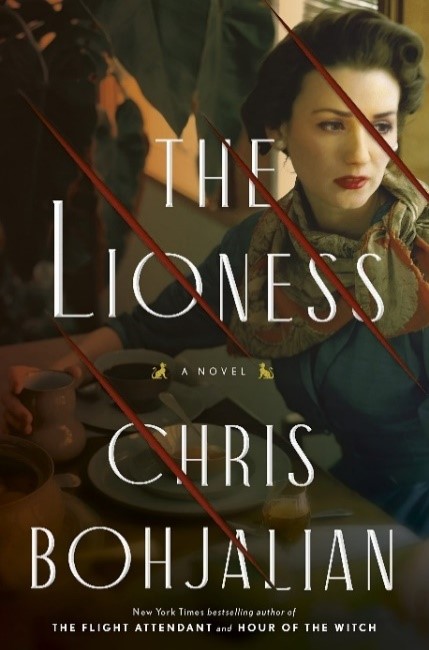
Aubrey Nye Hamilton Reviews: The Lioness by Chris Bohjalian


It’s the autumn of 1964 and Katie Barstow is a hot ticket in Hollywood. Everything she touches becomes box office gold, even the controversial movie in which she starred with a black man. She marries her brother’s childhood best friend and they honeymoon in Paris and then meet a group to go on a photography safari in the Serengeti. They include her brother and his pregnant wife, her publicist, her agent, her best friend and her husband, and the aforementioned black actor. Their chief safari guide led Ernest Hemingway on some of his African hunting trips. There are at least two dozen porters who carry their canvas bathtubs and who heat water for them every night so they can bathe, and they tote a generator to make ice for their gin and tonics. In short they leave Hollywood only to recreate the experience in the midst of a vast wilderness.

The Serengeti is in northern Tanzania, a country formed early in 1964 by the merger of Tanganyika and Zanzibar. To the west is the Congo where a bloody revolution had been ongoing for four years and in which the USSR was taking an active role. It seems to have never occurred to the group that a newly formed country next to a violent civil war might not be the safest place to be.

On the fourth day of their trip Russian terrorists overpower their guides and kill a few, taking everyone else prisoner. Their experience is narrated in nine different voices. Each of the nine sketches a quick background and how he or she came to be at that particular place at that particular time and then describes the present situation, advancing the plot. It can be hard to keep the names straight; I used the cast of characters in the front of the book more than once. The heading for each chapter is a breathless piece of fluff from a contemporary Hollywood gossip column about Katie and her companions, contrasting sharply with their current harsh reality.

The beauty, the danger, and the immensity of the land shine throughout the entire intense, violent narrative. The vivid and realistic depiction of the wildlife, predators and prey, is chilling. I will be checking for a hungry leopard lurking in the maple tree in my back yard the next time I step outside. An absorbing and hair-raising historical thriller.


·         Publisher:  Doubleday (May 10, 2022)

·         Language:  English

·         Hardcover:  336 pages

·         ISBN-10:  0385544820

·         ISBN-13:  978-0385544825


Aubrey Nye Hamilton ©2022

Aubrey Hamilton is a former librarian who works on Federal It projects by day and reads mysteries at night.
Monday, July 05, 2021

Aubrey Nye Hamilton Reviews: Bloody January by Alan Parks


I learned about Alan Parks during the online Hull Noir conference in March 2021.  He is a Glasgow author who spent most of his career in the music industry. He wrote a book about social housing in post-war Glasgow which somehow metamorphosed into the first Harry McCoy historical thriller. It was one of the top crime debuts of 2018 and was shortlisted for the Grand Prix de Littérature Policière, the most prestigious award for crime and detective fiction in France.

Bloody January (Cannongate, 2018) introduces Harry McCoy, newly promoted to detective on the Glasgow police force. Harry has a drug addict girl friend who’s a prostitute, and his best friend from his childhood is now a criminal kingpin. Harry also has a bit of a drinking problem. He gets a tip from a coldblooded killer in prison about a murder that’s about to take place. With little to go on and not really believing the stool pigeon, Harry still looks for the prospective victim and finds her just in time to see her killed and her murderer shoot himself in full view of a bus station packed with witnesses at morning rush hour. Harry returns to the jail to question his informant more closely, only to find he’s been killed too. Three murders in 24 hours is a lot, even for Glasgow, and Harry’s supervisor says he wants a resolution fast.

Set in January 1973 amid the poverty and desperation of Glasgow, the general population is sad, depressed, and struggling. Steelworks, coal mines, engine factories, and other heavy industries went out of business about that time, leading to long-term economic decline with mass unemployment, population flight, and high levels of urban decay. New gangs moved in, younger and more violent, and hard drugs arrived with them. This backdrop of Glasgow’s low point is perfect for noir crime fiction.

McCoy is an interesting character who faints when he sees blood, unfortunate in a homicide cop. He’s got a turbulent backstory and crosses the line between the police and the felonious element occasionally because of loyalty to his criminal friend who protected him as a child. He does have a mostly good relationship with his manager, who recognizes McCoy’s innate ability. Light relief comes through McCoy’s green-as-grass sidekick, who is a new addition to the department. He is supposed to be shadowing McCoy to learn the ropes, but McCoy avoids him in creative ways. Parks worked in details from his music industry experience in a nice touch. An excellent piece of Tartan noir. The fourth in the series is scheduled for release in August 2021.


·         Publisher:  Canongate Books; Main edition (May 28, 2018)

·         Language:  English

·         Hardcover:  320 pages

·         ISBN-10:  1786891336

·         ISBN-13:  978-1786891334


Aubrey Hamilton ©2021

Aubrey Hamilton is a former librarian who works on Federal It projects by day and reads mysteries at night.

Tuesday, December 11, 2018

Guest Post: Writing The Storm Over Paris by William Ian Grubman

Please welcome author William Ian Grubman to the blog today. His historical thriller, The Storm Over Paris is set in 1942 and involves the war, Nazis, stolen art, and more.

Writing The Storm Over Paris


Because I am a first-time novelist, I was faced with the task of figuring out how a book is even written. Although I am an avid reader, I was treading on soft soil trying to keep balance.

I have been a student of art and art history most of my life, as well as a collector. That would prove immensely useful with the type of story I was going to create.

When I first began to type (with no clear story line in sight), I was aware that art theft and art forgery were topics that interested me, but I wasn’t quite sure how to bring the story to life. I spent a great deal of time in front of a blank computer screen.

A writer friend of mine suggested that I just begin to type. She said the story would come as I worked. She was right. I resolved my book would take place in New York City, current day. After writing what I felt was a solid prologue, I discovered my story really didn’t take place in New York, and it wasn’t current day. I needed to go back. I needed to have the story take place in Paris during World War II. This is where the research began.

To formulate the tale, I began taking notes and creating time lines but wasn’t familiar with several visuals that would require in depth research. I headed to Paris. Although I’m familiar with the City of Lights, I needed to see details: parks, buildings, places of interest and historical monuments. I filled my camera with pictures and took copious notes as well as highlighting specific points of interest on a map.

I tried to write for at least two to three hours every day, but that schedule adjusted itself according to my creative juices. My characters were coming to life in great detail, while at the same time I was researching World War II Paris.

I met with a master forger who I tracked to Orange County, California, and he gave me the necessary processes of producing paintings, aging canvas, etc. Now I had to create a way for my characters to follow his steps. Additionally, my characters would have to face the day to day encounters of Nazi occupied Paris and some of the historical events of the time.

The story began to unfold. At some point in time I needed a creative hiding place for stolen artwork. I’m not sure how or even why, but I began to research the parks of Paris. That’s when I discovered the follies in Parc Monceau. Voila! I had my hiding place. Of course, that find created a new problem. How would I get the paintings to the park? The task would have to be creative, posing obstacles along the way, yet not appear contrived.

My goal was to keep my readers on the edge of their seats. That meant some sort of danger every other page or so. Not an easy task - - - and in the beginning I thought some of the adventure seemed odd.

Enter RE-WRITE.

The story had great bones, but the delivery was rough and burdened with adjectives. Descriptions seemed overly detailed. In my effort to describe each scene, I was overloading my reader with too much information. Once again, I needed to cut and cut and cut.

Research was my daily routine. I wanted my audience to absolutely feel they were in Paris. I wanted them to know the ins and outs of war time survival as well as the anguish the Germans created for the French. So, I walked a fine line between description and boredom.

When I finally had a finished product, I began the search for an editor. I knew that I needed to find someone who would pull my book apart bit by bit. After the first edit, I reviewed the manuscript and commenced with re-writing my novel. I went through this process four times, each time producing less and less commentary. The fourth edit came back virtually clean but for a few tweaks, which I repaired in less than a few hours. I returned the book to the fourth editor for review and received two thumbs up.

Start to finish, it took me three and a half years to complete The Storm over Paris.


William Ian Grubman ©2018

William Ian Grubman is a retired businessman, philanthropist, artist, author, art collector, and performing artist from Los Angeles, California. In every sense of the word, he is a renaissance man. His website is https://www.williamgrubman.com/ 

Monday, November 30, 2015

Monday With Kaye: "Treason at Lisson Grove" by Anne Perry (Reviewed by Kaye George)

Since back in February, Monday in these parts has been made a little more bearable by it also being “Monday With Kaye.” Each week she has brought another book our way to consider. Today marks the 42nd of such posts and the first of the final three as Kaye has told me she is running out of reviews. Not surprising since she is busy writing her own books and doing other things.

It has been a privilege and an honor to bring these reviews to you. In this season of giving thanks, I must once again express my gratitude to Kaye for allowing me to run these reviews as well as the good folks of Suspense Magazine for allowing them to appear here.

Enough from me… on to the review of a historical thriller….


Treason at Lisson Grove by Anne Perry


We're treated to a new Charlotte and Thomas Pitt novel in this historical thriller. Lisson Grove is the location of Pitt's organization, always called Special Branch. In the bang-up beginning, Pitt and Gower, another agent, pursue a man they witnessed standing over a newly dead body. The chase takes them
across the channel to St. Malo in France. There, a plot seems to be gathering head, something boding of violence and a fundamental change that, once done, may not be able to be undone.


Pitt is set adrift, cut off from his employer and his family, not knowing who he can trust.


Back home, Victor Narraway, Pitt's superior is floudering, running into charges and accusations that he can't fight. When he informs Charlotte that Pitt has been suddenly called overseas, and when she realizes what an awful situation Narraway is in, she feels she must help him--partly for his sake, but also because Pitt's job depends on Narraway's continued employment. The roots of the present-day plot seem intertwined with an old episode that took place during a thwarted Irish uprising. So Narraway and Charlotte, posing as half-siblings, take off for Dublin where feeling still run deep against the English--and Narraway in particular. Now it's Charlotte who doesn't know who she can trust.

To complicate things even more, Charlotte's housekeeper, whom the family doesn't care for anyway, quits suddenly and Charlotte must provide for someone to watch the children, Jemima and Daniel. A charming new character, Minnie Maude, is introduced and saves the domestic day.


Narraway's problems, it becomes evident, are becoming looming problems also for Pitt. Disaster piles atop disaster and the targets shift and remain unclear as Charlotte and Pitt, separately, try to save their country from a treacherous, treasonous plot. Perry is still at the top of her form.


Reviewed by Kaye George, Author of Choke, for Suspense Magazine
